
Key trends shaping the gaming industry
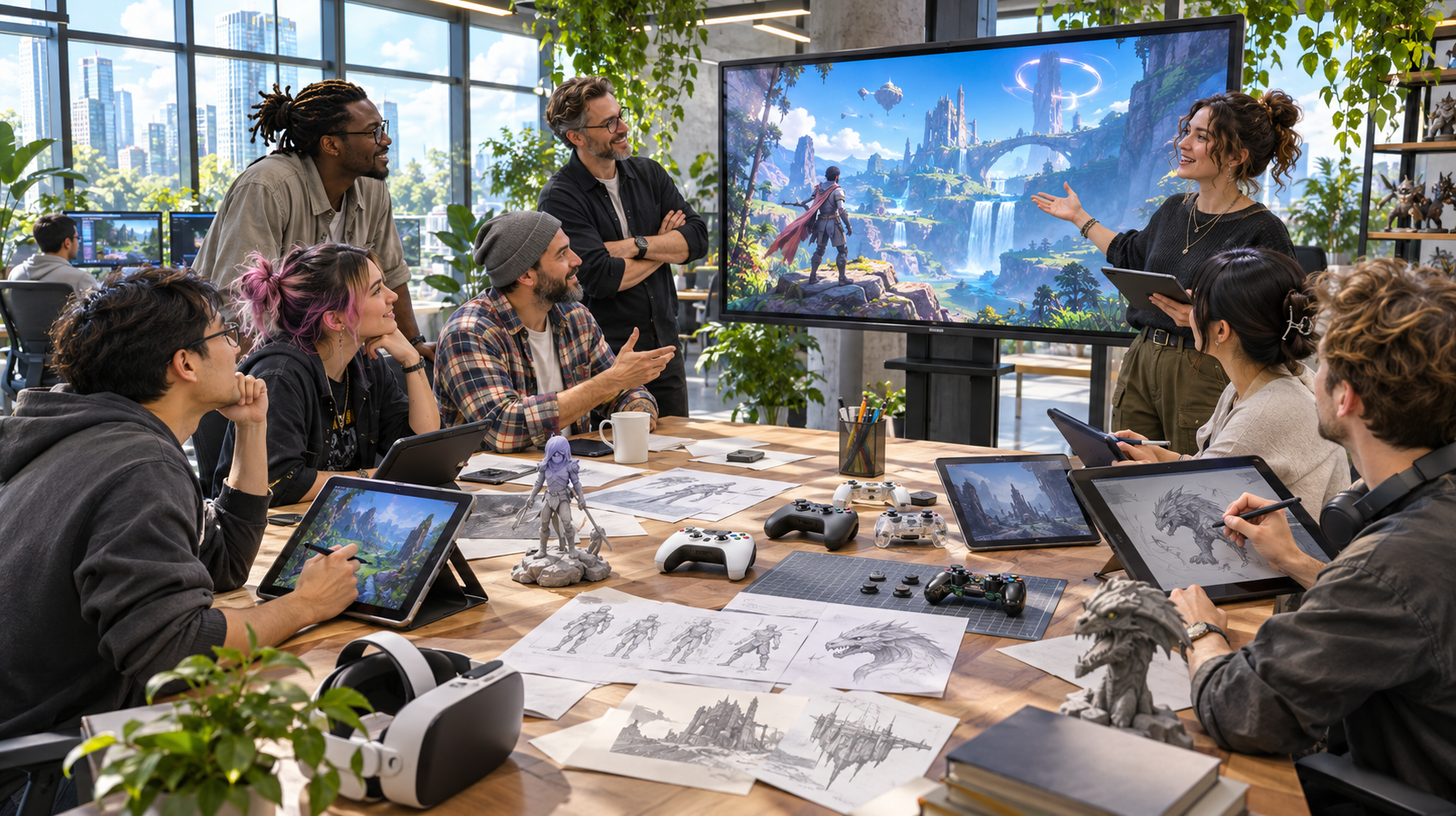
The gaming industry is changing for more reasons than new technology. Freedom to choose a platform, social connection, creativity, and the chance to return to favorite virtual worlds all matter more than ever. These shifts are shaping the future of video games just as much as graphics quality is.
Artificial intelligence in development
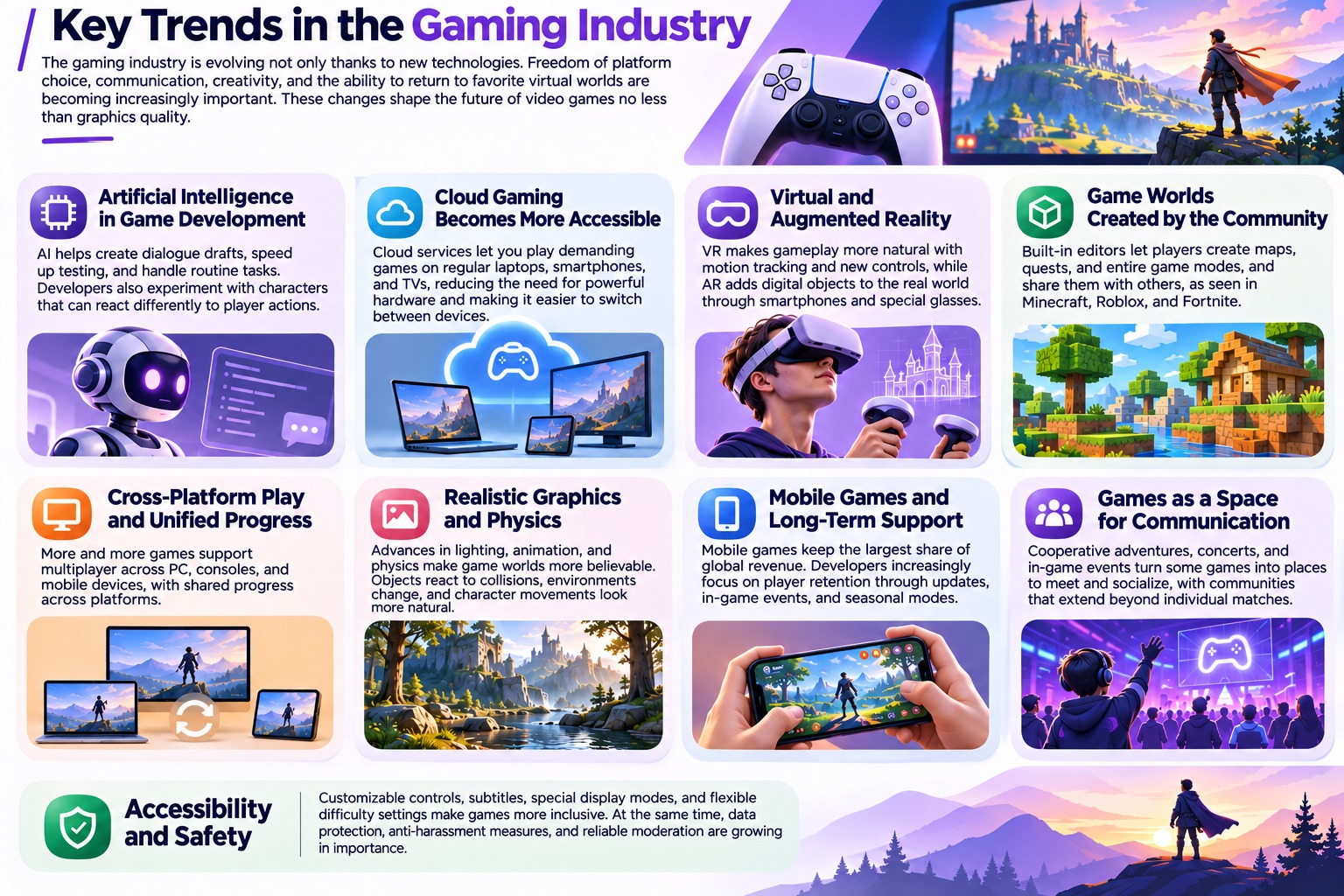
AI helps developers draft dialogue, speed up testing, and handle routine tasks. Studios are also experimenting with characters that can take a player’s actions into account and react differently to events. Still, these tools don’t replace the work of writers and artists, and questions about output quality, copyright, and control over content remain important.
Cloud gaming is becoming more accessible
Cloud services make it possible to run demanding games on everyday laptops, smartphones, and TVs, since most of the processing happens on remote servers. This reduces dependence on a device’s power and makes it easier to switch between screens. That said, the gaming experience still depends on a stable internet connection and low latency.
Virtual and augmented reality
Virtual reality (VR) makes interacting with a game world feel more natural through motion tracking and new ways to control the action. Augmented reality (AR) lets players see digital objects overlaid on their real surroundings through smartphones and special glasses. For now, the cost of hardware and a limited selection of compatible games are holding back wider adoption.
Community-built game worlds
Minecraft, Roblox, and Fortnite’s creative modes show how user-generated content keeps players engaged. Built-in editors let players create maps, quests, and entire game modes, then share them with others. Studios are increasingly investing not only in finished games but also in creative tools, turning players into co-creators of virtual worlds.
Cross-platform play and shared progress
More and more games support multiplayer matches across PC, console, and mobile. Cross-platform progress saving also lets players pick up where they left off without losing any achievements. These features are becoming a major selling point, though they aren’t yet available in every game.

Realistic graphics and physics
Advances in lighting, animation, and physics modeling are making game worlds more convincing. Objects react to collisions, environments change in response to player actions, and characters move more naturally. Even so, a distinctive art style remains just as important as technical realism.
Mobile games and long-term support
Mobile games still hold the largest share of global market revenue. Rather than chasing constant new installs, developers are increasingly focused on keeping their audiences engaged by releasing updates, running in-game events, and offering seasonal modes. Subscriptions and in-app purchases remain common ways to make money, which makes transparent terms and fair game balance more important.
Games as social spaces
Shared adventures, concerts, and in-game events are turning some games into places to meet and hang out. Communities form around games and keep going well beyond individual matches. As a result, social features are becoming a key part of development, especially in multiplayer games.
Accessibility and safety
Customizable controls, subtitles, special display modes, and flexible difficulty settings make games easier to play for people with different needs. At the same time, protecting personal data, fighting harassment, and providing reliable moderation are becoming more important. The industry’s growth depends increasingly not just on technology but on the quality of the player experience.